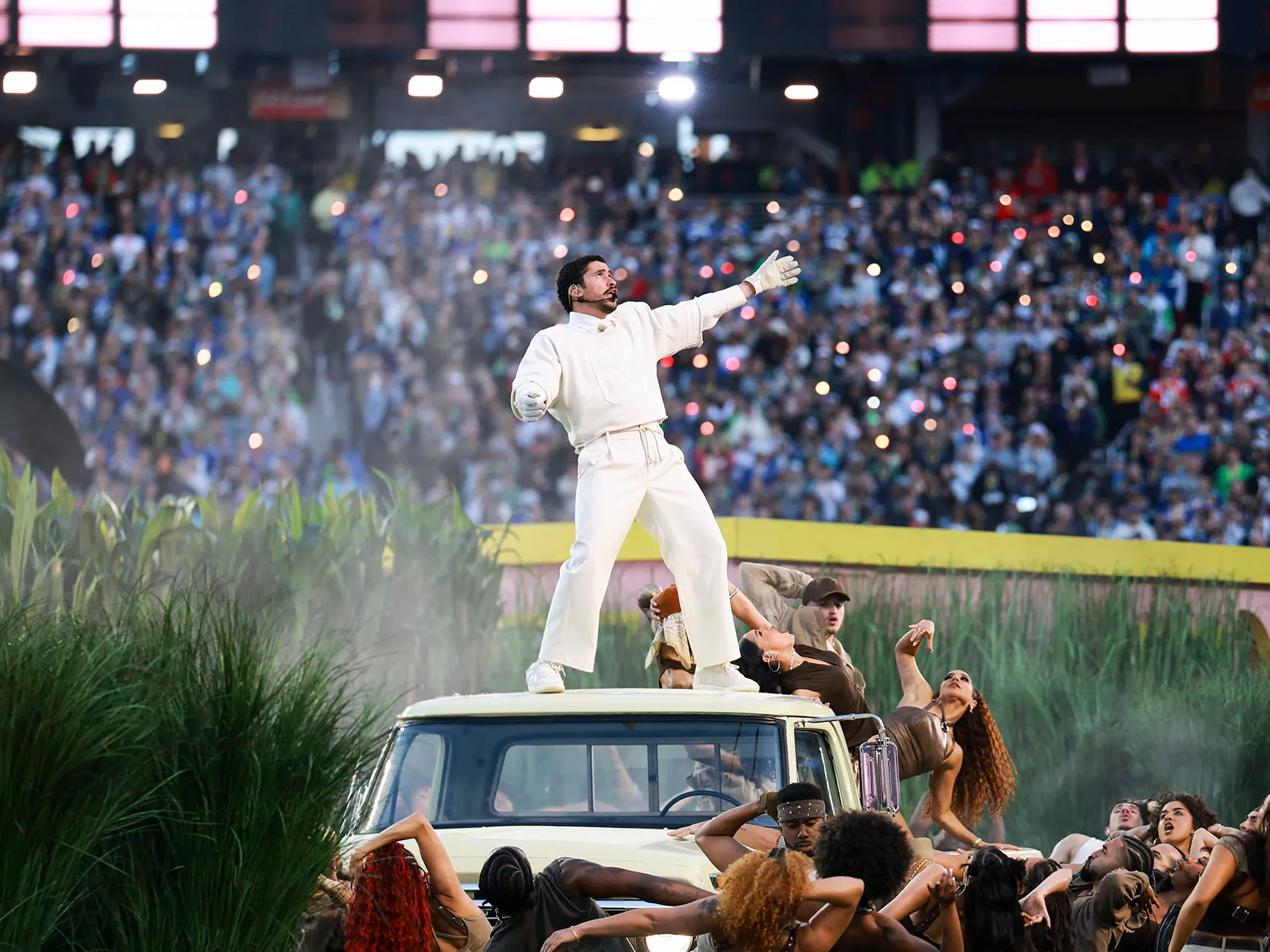
On February 8, 2026, one of America’s top artists, Bad Bunny, performed at one of the country’s most viewed and publicized events: The Super Bowl Halftime Show. Becoming the first halftime performer to sing entirely in Spanish, Bad Bunny made history at Super Bowl LX, delivering a performance which will be remembered for its presentation and symbolism. The Puerto Rican artist used his time on stage to create a unique performance full of diverse cultural representation and a variety of subtle messages about larger social and political issues.
Instantly establishing a direct connection to his own culture, Bad Bunny’s performance began with a young boy exclaiming: “Qué rico es ser latino. ¡Hoy se bebe!”, a popular Latin American phrase translating to “How great it is to be Latino. Tonight, we’re drinking!”. Following this introduction, Baby Bunny walked through a field, or “maze”, of sugar cane as he sang one of his top hits, “Titi Me Pregunto”. The sugarcane was not simply part of the set design, though. It served as a symbol for the many Caribbean countries that endured a long history of colonization and forced labor. Even more specific to Bad Bunny himself, his homeland Puerto Rico’s sugar production and land were largely exploited by the United States following colonization. In filling his stage with images of agricultural workers and sugar canes, Bad Bunny subtly alludes to this complicated history.
As the show continued, so did Bad Bunny’s references to the relationship between Puerto Rico and the United States. As he sang his song “El Apagon”, translating to “The Blackout”, many performers were seen hanging or climbing electrical pole props across the stage. The song discusses Puerto Rican pride alongside their frustration with the struggles of frequent electrical blackouts. The longest blackout in Puerto Rico, in 2017, lasted nearly a year following Hurricane Maria. This extended blackout, while a result of many things, was largely attributed to inadequate response and help from the US government. The people climbing the poles in Bad Bunny’s performance represent the Puerto Ricans who desperately climbed the poles during the blackout, attempting to restore them.
Bad Bunny’s hidden messages and cultural references did not end there, though. Bad Bunny also incorporated traditional Puerto Rican instruments and scenes representing typical Puerto Rican livelihood.ther more personal elements like the 64 on his jersey honored his uncle. Another recurring detail throughout the show was the color light blue. It was featured throughout the set, and notably on guest singer Lady Gaga’s dress. Bad Bunny also held up a Puerto Rican flag, in which the traditional dark blue was replaced with a light blue. This deliberate incorporation of light blue represents the color associated with Puerto Rican Independence.
By the end of the performance, Bad Buny spoke in English for the first time, saying “God Bless America” and holding up a football reading “Together We Are America”. In the last scene of the show, a large sign lit up, displaying “The only thing more powerful than hate is love”.
With each aspect of the performance carrying its own hidden message or reference, Bad Bunny deliberately transformed his show into something greater than a concert. The show celebrated culture, reflected history, and conveyed a message about the complex relationship and identity of many Latin Americans. By the end, though, Bad Bunny relayed both a message and a call for love in America. Like Kendrick Lamar’s halftime performance last year, the performance used one of the most popular stages to influence conversation about identity, unity, and what it means to be American.